
New and lovely residents in our birdhouse

Blog vol 5.50. New and lovely residents in our birdhouse
Fantabulous development!


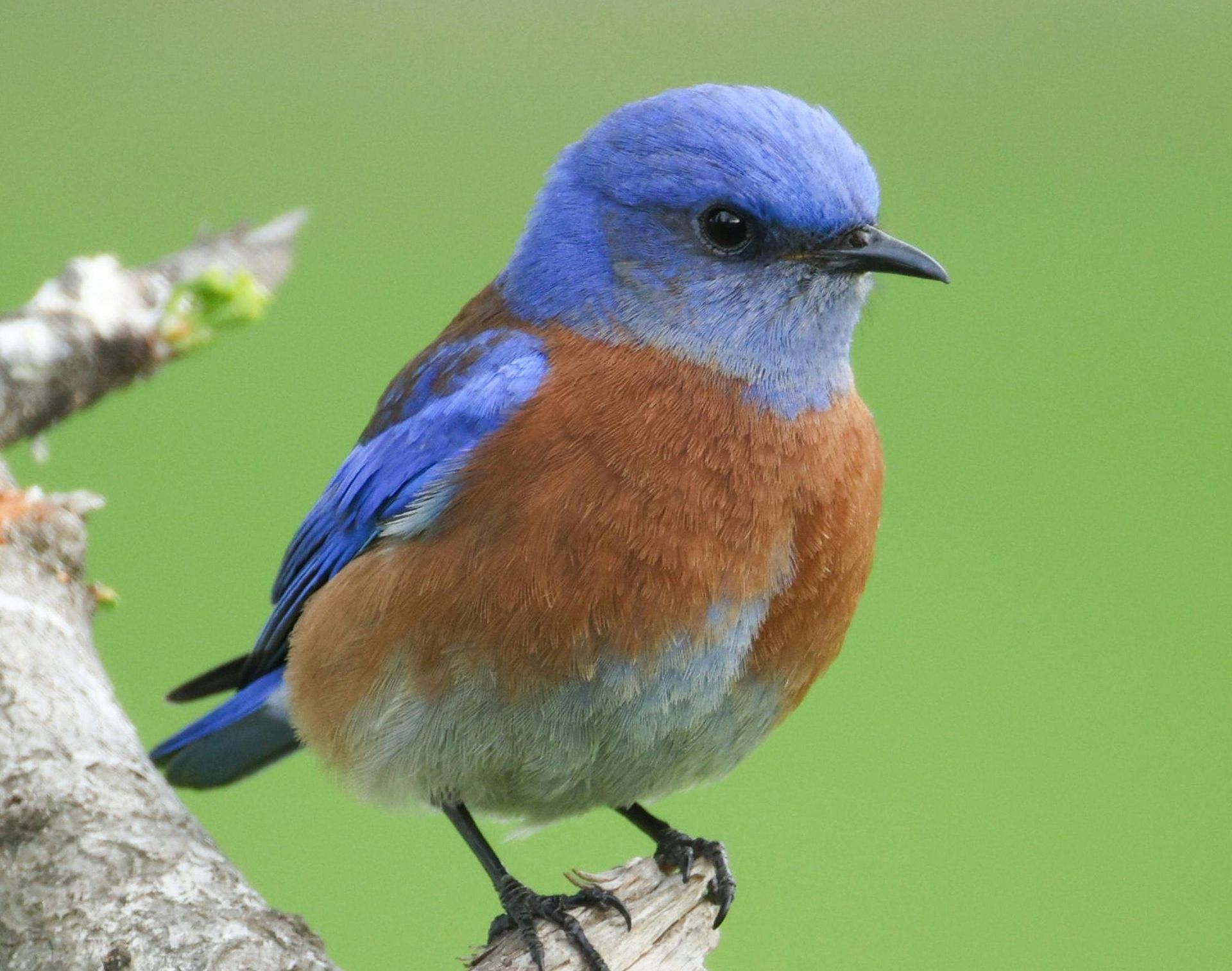
My family has been living on the same property for 23 years actively landscaping and planting trees. Over the years we have attracted more and different birds, Killdeers and Red-Tailed Hawks being two I have highlighted in the past. This winter, a neighbour gave us a birdhouse which we mounted on the post of our backyard pergola. Early in the spring we saw a pair of Eastern Bluebirds, Sialis sialis, trying to get into the house.  The hole, made for a wren or chickadee, was too small. They tried, but there was no way they were getting in. I took the house to my workshop, made the hole a quarter inch bigger, and voilà, we now have new and lovely residents.


This pair is busy gathering scraps, grasses, and twigs... you know what that means. We are so excited! These are such beautiful birds. 

We have been seeing an increase of paired Bluebirds in our area, likely because one of our neighbours (a different neighbour, we have pretty cool neighbours:) has been feeding them mealworms. They just love worms, especially mealworms. The worms supplement their diet of berries, providing a wonderful source of protein for a young and rapidly growing brood. The Bluebird has bright blue wing feathers and head covering with an orangey chest, with the male more lustrous than the female. Bluebirds also have an easily recognizable musical chur-wi or tru-ly song that is delightful. They apparently prefer free flowing water such as a small fountain or stream though we do not have anything of the sort. And no cats, a feral cat can be a big problem for these worm-eating songbirds. 


Eastern Bluebirds are the state bird of Missouri (we lived there 1998 to 2001) and they winter all over the Eastern United States then migrate to Canada during the summer to nest. One pair migrated to our backyard.


We are truly thankful for neighbours and for the opportunity to host these lovely creatures.   


How does this connect to eyes you ask. Hmm…


Til Next week,


The good doctor


By Dr. Mark Germain May 22, 2026
Ever wondered where the phrase "apple of the eye" came from? The good doctor explains.
By Dr. Mark Germain May 17, 2026
This week, we learn about the impact cataracts can have on life and the difference surgery can make.
By Dr. Mark Germain May 7, 2026
The good doctor admires the wonders of the Osprey's vision.
By Dr. Mark Germain May 1, 2026
The good doctor discusses how the eye is a window to the heart with the help of the OCT.
The good doctor take a deeper look at how gut health is connected to eye tissues.
By Dr. Mark Germain April 29, 2026
Blog vol 6.40. The Gut and the Eyes. One of my biggest jobs is to keep abreast of new research and advances in eye health. Most recently, we have seen new stem cell research, gene therapies, as well as new drugs for dry and wet macular degeneration. In January of this year, there was an article in the journal, Cell Death and Disease, that looked at cell apoptosis, specifically with the photoreceptors of the eye. (Read the article here ). Apoptosis is the genetic programming of deliberate and constructive cell death, allowing for the maintenance of healthy structures and systems in the body. Some estimates have the body replacing 50 to 70 billion cells daily by this process. Necrosis, on the other hand, is unplanned cell death caused by injury, toxins, or other negative outside factors; this causes inflammation and disrupts the body’s balance of things. There are stressors that speed up cell turnover. The study looked at photoreceptors in the retina and were able to demonstrate cellular recovery, even in late stages of apoptosis, recovery not breakdown. When certain stressors were reduced, by working with the mitochondria, there was recovery of the photoreceptor cells. How? Mitophagy, the mitochondria’s own process of programmed breaking down and then repurposing the recycled components for new ones. This mitochondrial repair helps to reverse the sequence of apoptosis for the photoreceptors. Mitochondria, how cool. How is this helpful for our eyes? Conditions like retinitis pigmentosa or macular degeneration directly involve the photoreceptors and may be slowed or reversed by helping the mitochondria. So, let’s take care of those mitochondria. There is some evidence for nutritional support for the mitochondrial system. The nutrient, Urolithin A (UA), which is a compound made in our gut from fiber found in pomegranates, berries, and nuts is the only clinically proven substance known to trigger mitophagy, made in the gut no less. Vitamin B3 is critical for mitochondria function, however vitamin B3 based supplements are still to be clinically tested for their support of cell recovery. Nutrients Coenzyme Q10 and L-carnitine are known to help the mitochondria generate energy, and interestingly, infrared light therapy has also been shown to benefit mitochondrial function. Again, food for thought. The gut and its function needs a lot of research. How do probiotics and nutrient precursors affect eye tissues? It is so interesting that the gut can be a factor in eye health. Maybe adding Urolithin A as a supplement is wise, along with the antioxidants in Lutein and Zeaxanthin we use to combat photoreceptor degeneration. Will keep you posted on any new developments.  The good doctor
By Dr. Mark Germain April 16, 2026
The good doctor focuses in on visual processing. Why do we miss things that are right in front of our eyes?
More Posts