
Implants for glaucoma treatment
Blog vol 6.20. Implants for glaucoma treatment.
The midterm results are in on a new implant device for lowering pressures in open angle glaucoma. SpyGlass Pharma has developed an intraocular lens (IOL) implant for cataract surgery that has embedded two drug eluting pads that slowly release an agent that will continuously lower eye pressures to treatable levels over a long period of time.
Elute – to remove (adsorbed materials) from an adsorbent by means of a solvent (Merriam- Webster)
Adsorption – the adhesion in an extremely thin layer of molecules (as of gases, solutes, or liquids) to the surfaces of solid bodies or liquids with which they are in contact (Merriam-Webster): adsorb, adsorbent.
These pads are placed in the eye with the new lens in routine cataract surgery. The pad releases just the right amount of drug to keep the eye pressures continuously at a manageable level. This method takes the drug directly to where it is needed and provides a continuous supply, allowing for more stability in eye pressure.
The difficulty in glaucoma treatment is keeping the eye pressures under control.
The pads are embedded with bimatoprost, a powerful prostaglandin that works on lowering pressures by increasing aqueous outflow. This agent is presently available in a topical eye drop that must enter the eye then get to the site of action, much less direct, much less reliable. The resulting reduction in pressures can be up to 35%. The intracameral (different method) implant, Durysta, has shown promise, lasting for a 6-8 months. This implant on an IOL (cataract surgery) can last up to three years, with a sustained 45% drop in eye pressure over the first 18 months with no adverse reactions (Read the SpyGlass Pharma report here). More results to follow.
This is encouraging for glaucoma patients because of the long term, chronic nature of the disease. Drops for treatment often have preservatives which negatively affect the tear film and cause inflammation, especially over years of use. The beauty of an implant is that the drug gets directly to the site with less adverse results and no battling with corneal problems (red, sore eyes). Interestingly, three different drug concentrations for the implant had similar results for eye pressures. The implants worked most effectively with low to medium risk patients, providing little relief for late-stage glaucoma patients.
It is also encouraging because it represents a paradigm shift in glaucoma therapy. The patient will still need to be monitored for pressures and for nerve fibre loss, but the clinician can be assured that the patient is taking their medication. Studies show that patient’s consistent use of nightly drops for glaucoma, even with their use monitored, is only 69% of the time. With the implant, there is 100% compliance and a 45% drop in eye pressure. This improves the prognosis significantly.
Prognosis – the prospect of recovery as anticipated from the usual course of disease or peculiarities of the case (Merriam-Webster)
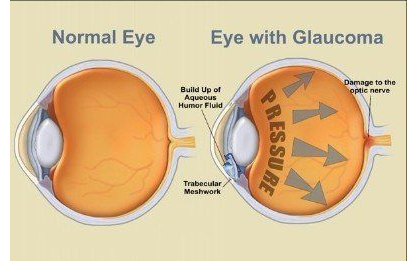
There is no recovery from glaucoma, but it can be controlled, damage prevented, most of the time. Too high eye pressure results in permanent vision loss. There is no pain involved, no warning signs. Again, the difficulty in glaucoma treatment is keeping the eye pressure under control. The continuous release of drug from an implant may provide just the stability in treatment needed.
Future questions: When depleted, can the pads be recharged? or can the eluting pads be improved to release the drug for an even longer period? This preliminary success should encourage other implantable drugs, much potential here.
Keeping abreast on the latest in eyes,
The good doctor