Now onto deep space
Blog vol 6.24. Now onto deep space
This blog deals with the eyes, eye health, light, and perception.
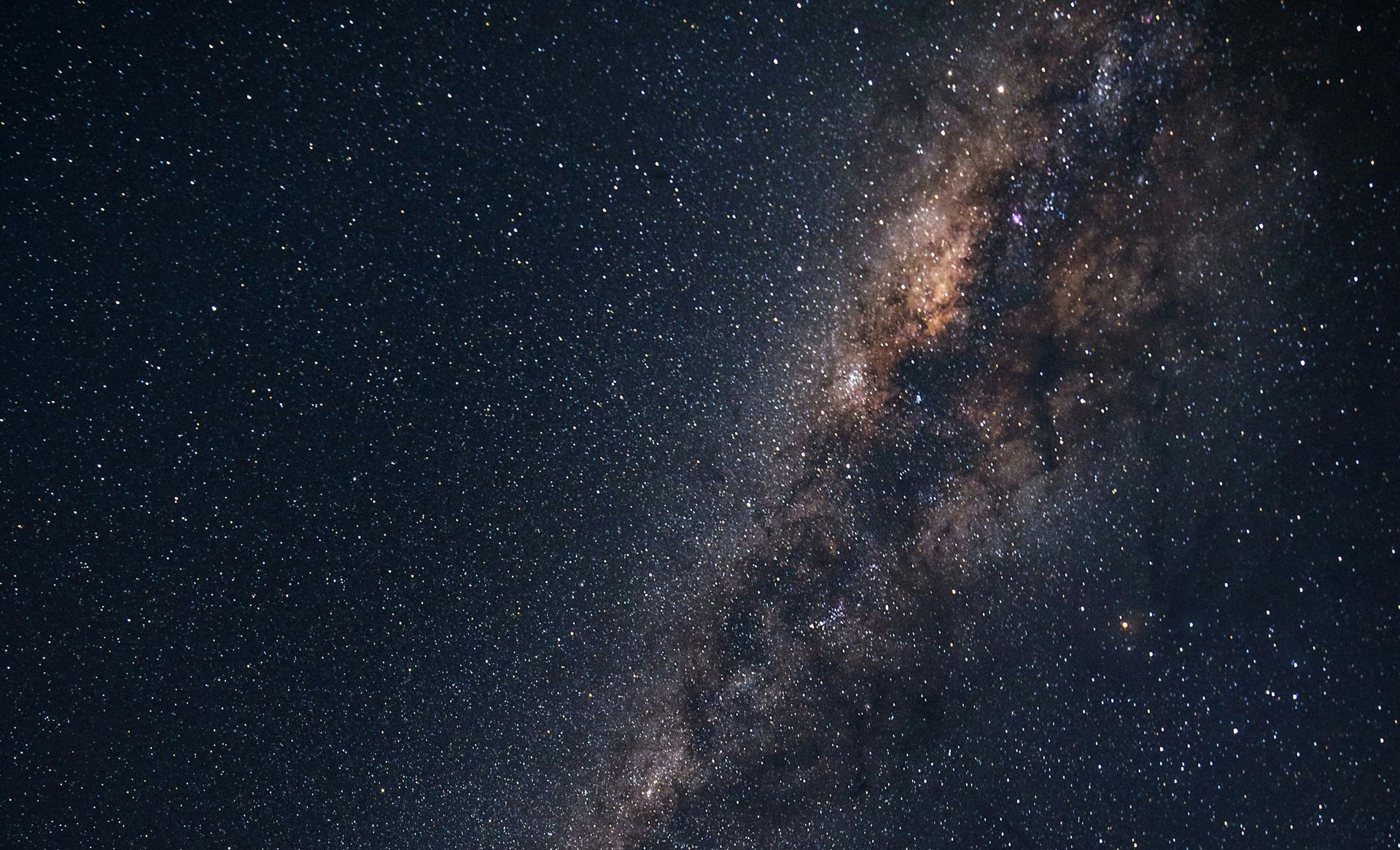
A new telescope. This is not your grandma’s telescope from RONCO, this is one the most sophisticated pieces of “optics” ever assembled. Back on December 25th, 2021, the James Webb Space Telescope was launched, and has since sent very deep space images with extra long wave infrared waves. A friend and fellow space enthusiast, Clint, died on that same day.
The journey started in 1998, when people like Clint, with their head (and hearts) in the stars, dreamed of a telescope that could record a lot of pictures of the night sky in detail over a long period of time. Twenty-seven years later and at a cost of $1.9 billion dollars (a bargain compared to Webb’s $10 billion), and with a tonne of ingenuity, hard work, collaboration and perseverance, we now have the Vera C. Rubin Observatory.
Vera C. Rubin (1928-2016) was a renowned astrophysicist who did groundbreaking work with dark matter. ”In a spiral galaxy, the ratio of dark-to-light matter is about a factor of ten;” she found the first direct evidence of dark matter. In her observations on galaxy rotation, she found that it defied Newton’s laws, radical thought. Who better to name a new telescope after?
Location: On the peak of Cerro Pachón, a 2682-metre-high mountain in Northern Chile
Clear skies, low humidity, seismic stability, low light pollution, yet still close enough to an urban centre for access.
Self-sustaining facility: The telescope is housed in a 2500 sq. m facility with dedicated rooms for cleaning the camera and for cleaning and recoating the mirrors when needed, all reducing unwanted down time.
Camera: The size of a SUV weighing 2800 kg, the largest camera ever built having a 3200-megapixel CCD array.
Fastest Slewing Large Telescope: It can move the 243-tonne mount in 5 seconds to the next position, and with minimal vibrations to keep the images constantly clear.
One image: The telescope boasts a wide field, 10 square degrees in size, and yet high resolution in the 330 to 1060 nanometre range, allowing for a wide variety of colours for analysis.
Two mirrors in one: The overall mirror of the telescope is 8.4 m in diameter, not unique, but by combining the primary mirror with the tertiary (the inner 5.0 m), it is easier to shift the whole unit. Like all reflecting telescopes, it can have three reflecting surfaces as this design has the best of both worlds, large and yet compact.
Broad access to data: Pictures are available through a web-based portal, eventually with world-wide access (in 2 years).
This telescope will run for 10 years using timelapse photography and it will produce 60 petabytes of raw image data over that time.
With this new telescope, we have huge astronomical data and universal access. Enjoy the show (watch here).
The good doctor