
Looking good — Cosmetics for the Eyes

Blog vol 6.45. Looking good — Cosmetics for the Eyes
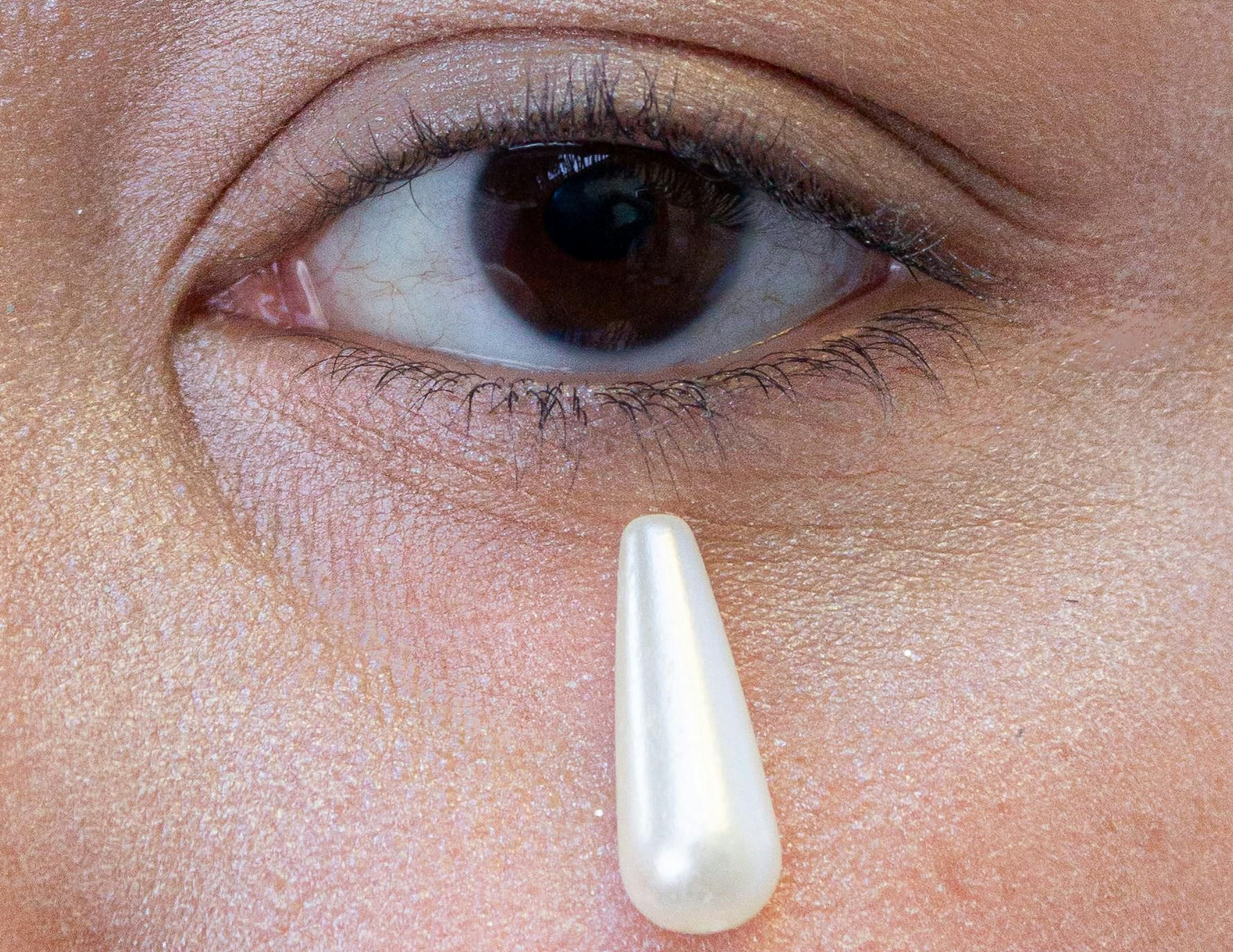

Cosmetics is huge business. Last year in North America, the cosmetics and beauty industry was a staggering $108 billion strong.  Yes, there are products for the eyes, lids, and lashes that can improve your look. 


During this season of weddings, graduations, and family reunions, we want to look our best. An eye whitener can (temporarily) disappear non-infection-related redness.  We gave this drop to a patient with a red eye who was in a wedding party on the weekend, all those photos! There have been products on the market since 1942 for eye redness, like naphazoline, which is a sympathomimetic agent that acts like adrenaline for the eyes. Two problems: a person with cardiovascular issues should not use this drop, and the rebound effect from the countering parasympathetic system, meaning more redness after use. 

Today’s answer for red eyes — Lumify. 


Lumify is an alpha-2 adrenergic agonist. It has a similar mechanism to naphazoline with less side affects. Interestingly, it was developed as a glaucoma treatment that decreased aqueous humor production and increased outflow of aqueous humor to the venous system. Being alpha-2 selective, it has fewer side effects than other adrenergic drops. It also is fast acting and the drop of choice when a quick pressure drop is needed during glaucoma treatment.  Researchers found that a nice side effect of the drop is vaso-constriction, resulting in whitening of the eyes. The dosage for Lumify is so low, at 0.025 %, that it has few other side effects. 


We recommend Lumify for those times when you need whitening, especially for special occasion photos. The dosage is so low that it is available over the counter.


And if you need fuller lashes — Latisse.


Prostaglandin analogues have been used to treat glaucoma for some time. In the 1990’s latanoprost was developed to lower pressure in the eye, a prostaglandin that increases uveo-scleral outflow of aqueous humor with very little side effects. One interesting side effect, however, was an increased in the darkening, fulness, and length of the eyelashes. A new analogue, bimatoprost, effectively treats glaucoma at 0.03% dosage.  With a custom-built applicator, the drop can be applied externally to the lashes for fuller, darker lashes.  This external treatment is the same dosage as the glaucoma agent, so a prescription is required, usually provided by a cosmetics clinic.   


Unwanted and wanted side effects, and cosmetic solutions for those times when you need help. Of note is that Lumify is pretty well instant acting and can be stopped at any time, while Latisse takes time to start working and needs to be continued. 


There are just so many interesting aspects to eye care. 


Til next week, 


The good doctor 


By Dr. Mark Germain May 22, 2026
Ever wondered where the phrase "apple of the eye" came from? The good doctor explains.
By Dr. Mark Germain May 17, 2026
This week, we learn about the impact cataracts can have on life and the difference surgery can make.
By Dr. Mark Germain May 7, 2026
The good doctor admires the wonders of the Osprey's vision.
By Dr. Mark Germain May 1, 2026
The good doctor discusses how the eye is a window to the heart with the help of the OCT.
The good doctor take a deeper look at how gut health is connected to eye tissues.
By Dr. Mark Germain April 29, 2026
Blog vol 6.40. The Gut and the Eyes. One of my biggest jobs is to keep abreast of new research and advances in eye health. Most recently, we have seen new stem cell research, gene therapies, as well as new drugs for dry and wet macular degeneration. In January of this year, there was an article in the journal, Cell Death and Disease, that looked at cell apoptosis, specifically with the photoreceptors of the eye. (Read the article here ). Apoptosis is the genetic programming of deliberate and constructive cell death, allowing for the maintenance of healthy structures and systems in the body. Some estimates have the body replacing 50 to 70 billion cells daily by this process. Necrosis, on the other hand, is unplanned cell death caused by injury, toxins, or other negative outside factors; this causes inflammation and disrupts the body’s balance of things. There are stressors that speed up cell turnover. The study looked at photoreceptors in the retina and were able to demonstrate cellular recovery, even in late stages of apoptosis, recovery not breakdown. When certain stressors were reduced, by working with the mitochondria, there was recovery of the photoreceptor cells. How? Mitophagy, the mitochondria’s own process of programmed breaking down and then repurposing the recycled components for new ones. This mitochondrial repair helps to reverse the sequence of apoptosis for the photoreceptors. Mitochondria, how cool. How is this helpful for our eyes? Conditions like retinitis pigmentosa or macular degeneration directly involve the photoreceptors and may be slowed or reversed by helping the mitochondria. So, let’s take care of those mitochondria. There is some evidence for nutritional support for the mitochondrial system. The nutrient, Urolithin A (UA), which is a compound made in our gut from fiber found in pomegranates, berries, and nuts is the only clinically proven substance known to trigger mitophagy, made in the gut no less. Vitamin B3 is critical for mitochondria function, however vitamin B3 based supplements are still to be clinically tested for their support of cell recovery. Nutrients Coenzyme Q10 and L-carnitine are known to help the mitochondria generate energy, and interestingly, infrared light therapy has also been shown to benefit mitochondrial function. Again, food for thought. The gut and its function needs a lot of research. How do probiotics and nutrient precursors affect eye tissues? It is so interesting that the gut can be a factor in eye health. Maybe adding Urolithin A as a supplement is wise, along with the antioxidants in Lutein and Zeaxanthin we use to combat photoreceptor degeneration. Will keep you posted on any new developments.  The good doctor
By Dr. Mark Germain April 16, 2026
The good doctor focuses in on visual processing. Why do we miss things that are right in front of our eyes?
More Posts