Fireworks and fireflies...
Blog vol 6.50. Fireworks and fireflies...
I really enjoy a good firework display and Canada Day, July 1st, is one of my favourite times. We had our own backyard display this year with lots of “Oohs” and “Aahs” for the pyrotechnic display. The most exciting firework was the “Wild Howler” with lots of swirling rockets and ear-piercing whistles.
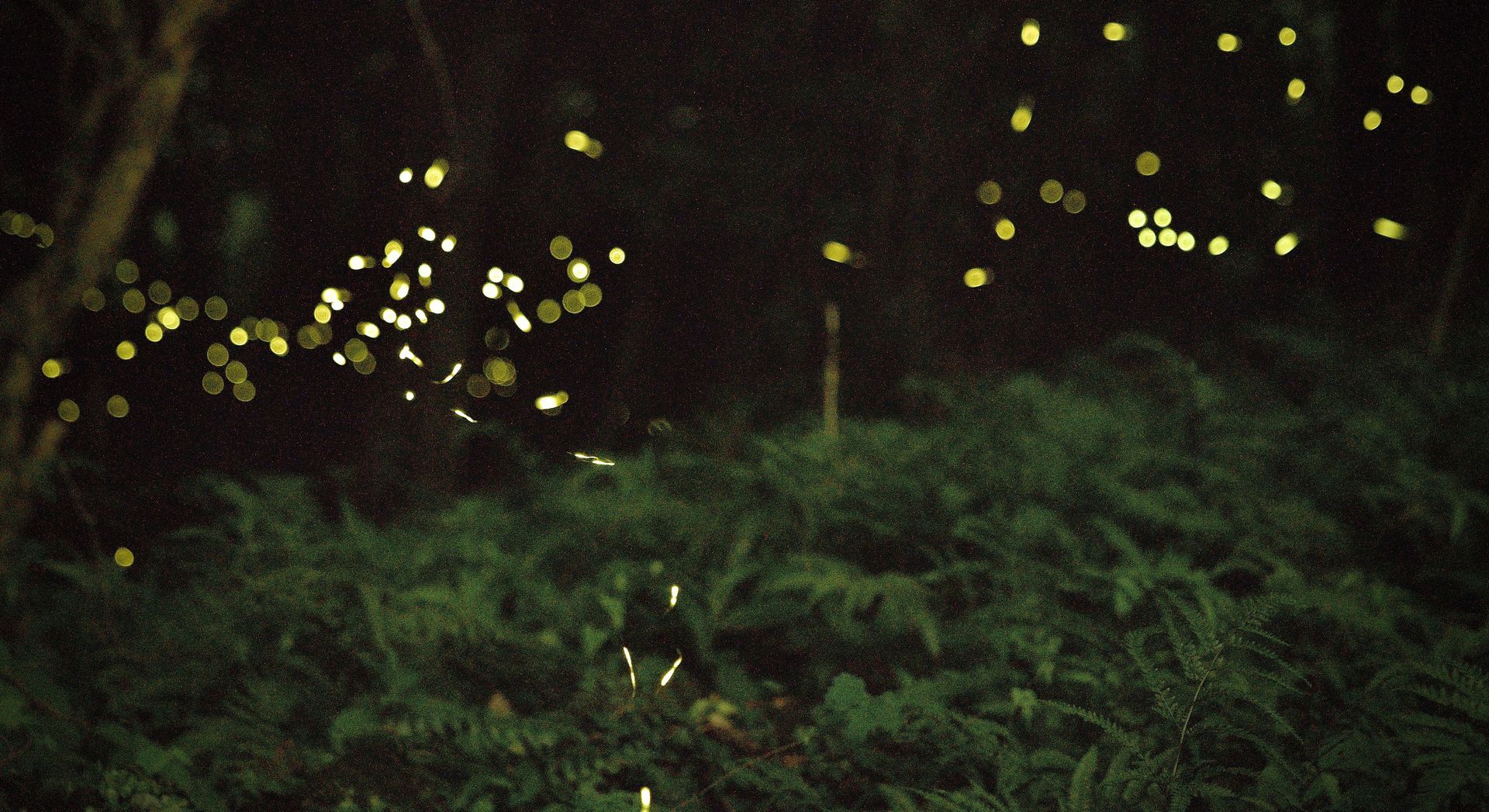
Another subtle, quieter display was the yard flashing with fireflies. Definitely very Canadian, they show up in all ten provinces and the Yukon Territory, with the highest concentration in Ontario and Quebec. Fireflies prefer warm, moist environments like woodlands, wetlands, and damp meadows, hence the large numbers we saw on Canada Day with all the heat and humidity.
Fireflies spend most of their life as glowworms, living in or on the ground and eating slugs, snails, and earthworms. They live as adult fireflies for a period of two to four weeks, changing their diet to flower nectar and pollen.
Fireflies produce light mainly to locate and attract a mate. The males are flying beetles that are looking to mate with flightless females on the ground. Each firefly species has a distinctive pattern of flashes that attracts the female of that species. The female flashes back to signal interest. The firefly’s flash also warns predators away: nasty tasting beetle nearby.
How do fireflies light up?
The firefly brings oxygen into its lower abdomen, the “lantern”. Luciferase (an enzyme) speeds up the combination of this oxygen and luciferin (a light-emitting compound) using Adenosine Triphosphate (ATP, a high energy molecule). The oxygen causes the luciferin to luminesce, releasing a flash of light. Amazingly, this requires little energy and provides cold light with little to no heat generation. The beetle controls the rate and length of flashes by regulating the flow of oxygen to the lantern.
This all happens in the photocytes, cells that have all the necessary ingredients to produce light. These photocytes are surrounded by a reflective layer of cells that reflect the light outward. The end result is very little expenditure of energy and a surprising amount of light. (Learn more here).
All very fascinating. Enjoy nature’s night-time show, fireflies in July.
Happy Canada Day, eh!
The good doctor