Another “Good Doctor”

Blog vol 5.52. Another “Good Doctor”

What I did not know when I started this blog 5 years ago, was that the title “the good doctor” was not original. There have been other good doctors (my guess there are bad ones too).   One I recently discovered is Dr. Vincenzo Arcone, an Italian immigrant from Sicily who arrived in Hamilton with his family in the late 1920’s.  Trained at Catania, Italy, he arrived in Canada to start a new life.


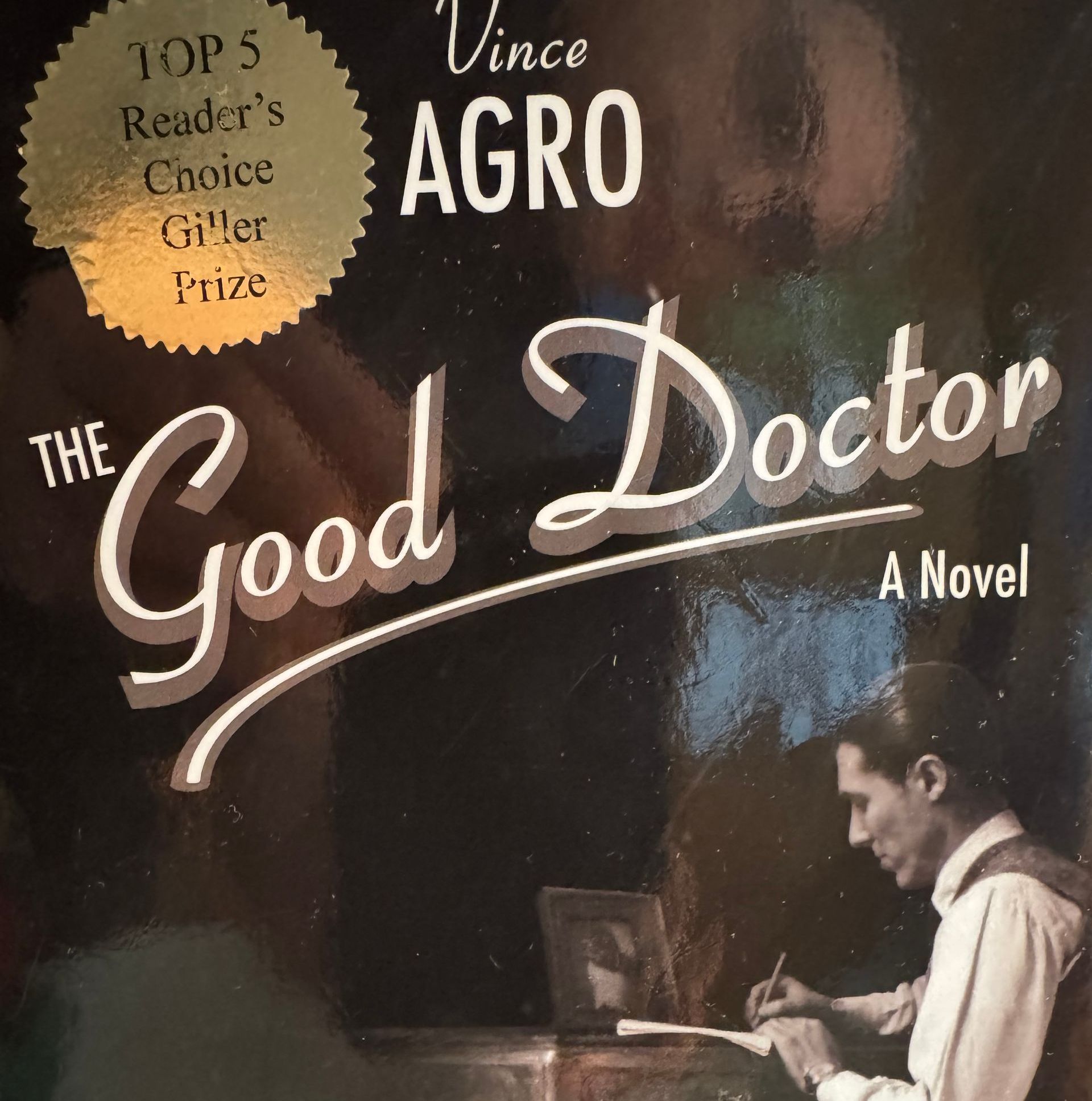
I picked up the book, The Good Doctor, by local writer and politician, Vince Agro, (he was related to Dr. Vincenzo Arcone, the “good doctor”) at a used book store because of the title, something familiar about that.  What interesting times. The period of the 1920’s and 30’s was very turbulent in Italy, with Benito Mussolini seizing power in 1922 in the midst of pre-Second World War Europe. “Doc Vince” was threatened by the Fascists in Italy and had to flee, and ironically was followed by the same Fascist movement when he got to Hamilton. 


He truly was a great doctor, taking care of his patients, helping to build his community at James South, and making a stand for Canada and his fellow Italians. There is plenty of intrigue in the book with the tensions between the new and old world and with the prejudice against Italians in the new homeland. Prejudice is not a new thing at all and it has never been good. In the case of Doc Vince, he was stridently against the triumphalism of Mussolini though not all his fellow Hamilton Italians were of the same mind. There was division in the local Italian community; it came with them from the homeland. Their non-Italian, Hamilton neighbours unfortunately did not make a distinction between the people who sympathized with Fascism and those who opposed it.   Also unfortunately, the pro-Fascists were not necessarily very quiet about their views, with parades on James Street celebrating Mussolini’s victories.


When Italy joined the Axis in World War II, the Canadian authorities, in the name of national security, treated all Italian immigrants as Fascists. Read the book, it does end well eventually. These were real people, truly human, with all their foibles and follies.  Very heroically, some of them even gave their lives to defend Canada, while still having strong ties to Mother Italy. Like life, not that simple. 


This book also speaks to our present times. So many people come to Canada fleeing political turmoil even now. Let’s welcome them. Doc Vince was truly a Good Doctor and Uncle and Community leader for Hamilton. Really interesting local history, so many familiar names and places seen in a different light.


Truly glad to have read this book, especially as we celebrate Canada Day and all the good that Canada stands for.  I am also glad to have a blog called “the good doctor” as I try to emulate the many good doctors who have gone before, like Doc Vince,


‘til next time,


The (hope to be as) good doctor


By Dr. Mark Germain May 22, 2026
Ever wondered where the phrase "apple of the eye" came from? The good doctor explains.
By Dr. Mark Germain May 17, 2026
This week, we learn about the impact cataracts can have on life and the difference surgery can make.
By Dr. Mark Germain May 7, 2026
The good doctor admires the wonders of the Osprey's vision.
By Dr. Mark Germain May 1, 2026
The good doctor discusses how the eye is a window to the heart with the help of the OCT.
The good doctor take a deeper look at how gut health is connected to eye tissues.
By Dr. Mark Germain April 29, 2026
Blog vol 6.40. The Gut and the Eyes. One of my biggest jobs is to keep abreast of new research and advances in eye health. Most recently, we have seen new stem cell research, gene therapies, as well as new drugs for dry and wet macular degeneration. In January of this year, there was an article in the journal, Cell Death and Disease, that looked at cell apoptosis, specifically with the photoreceptors of the eye. (Read the article here ). Apoptosis is the genetic programming of deliberate and constructive cell death, allowing for the maintenance of healthy structures and systems in the body. Some estimates have the body replacing 50 to 70 billion cells daily by this process. Necrosis, on the other hand, is unplanned cell death caused by injury, toxins, or other negative outside factors; this causes inflammation and disrupts the body’s balance of things. There are stressors that speed up cell turnover. The study looked at photoreceptors in the retina and were able to demonstrate cellular recovery, even in late stages of apoptosis, recovery not breakdown. When certain stressors were reduced, by working with the mitochondria, there was recovery of the photoreceptor cells. How? Mitophagy, the mitochondria’s own process of programmed breaking down and then repurposing the recycled components for new ones. This mitochondrial repair helps to reverse the sequence of apoptosis for the photoreceptors. Mitochondria, how cool. How is this helpful for our eyes? Conditions like retinitis pigmentosa or macular degeneration directly involve the photoreceptors and may be slowed or reversed by helping the mitochondria. So, let’s take care of those mitochondria. There is some evidence for nutritional support for the mitochondrial system. The nutrient, Urolithin A (UA), which is a compound made in our gut from fiber found in pomegranates, berries, and nuts is the only clinically proven substance known to trigger mitophagy, made in the gut no less. Vitamin B3 is critical for mitochondria function, however vitamin B3 based supplements are still to be clinically tested for their support of cell recovery. Nutrients Coenzyme Q10 and L-carnitine are known to help the mitochondria generate energy, and interestingly, infrared light therapy has also been shown to benefit mitochondrial function. Again, food for thought. The gut and its function needs a lot of research. How do probiotics and nutrient precursors affect eye tissues? It is so interesting that the gut can be a factor in eye health. Maybe adding Urolithin A as a supplement is wise, along with the antioxidants in Lutein and Zeaxanthin we use to combat photoreceptor degeneration. Will keep you posted on any new developments.  The good doctor
By Dr. Mark Germain April 16, 2026
The good doctor focuses in on visual processing. Why do we miss things that are right in front of our eyes?
More Posts