On a “lighter” note
Blog vol 4.13. On a “lighter” note.
Last week’s blog on Wnt signalling bent my brain, so this week, a lighter topic.
Light and plants in fact. This time of year, in our area there are fields of sunflowers grown as cut flowers or for the seeds. The sunflower is a fascinating plant whose flower follows the sun across the summer sky, though in actuality it is only the young flower that is heliotropic, attracted to the sun. As the flower matures it locks in on the east as it waits for the sun to rise and stays there. Our family grows them for their beauty and to have the added benefit of free-standing birdfeeders in late summer. Very cheery and hopeful, one cannot help but think of Van Gogh’s beautiful painting of sunflowers.
Sunflowers, moonflowers.
A wonderful picture book, just released in 2023, by author Sarah Mackenzie and illustrator Gabrielle Grimard, called While Everyone is Sleeping tells the story of a little shrew who goes out at night to dance among the moonflowers (ISBN 978-1-956393-02-6). It is worth a read, especially with the grandkids. The concept of moonflowers captures the imagination. Are they like sunflowers, but follow the moon? And why are these flowers open at night when all the pollinators are in bed in their nests?
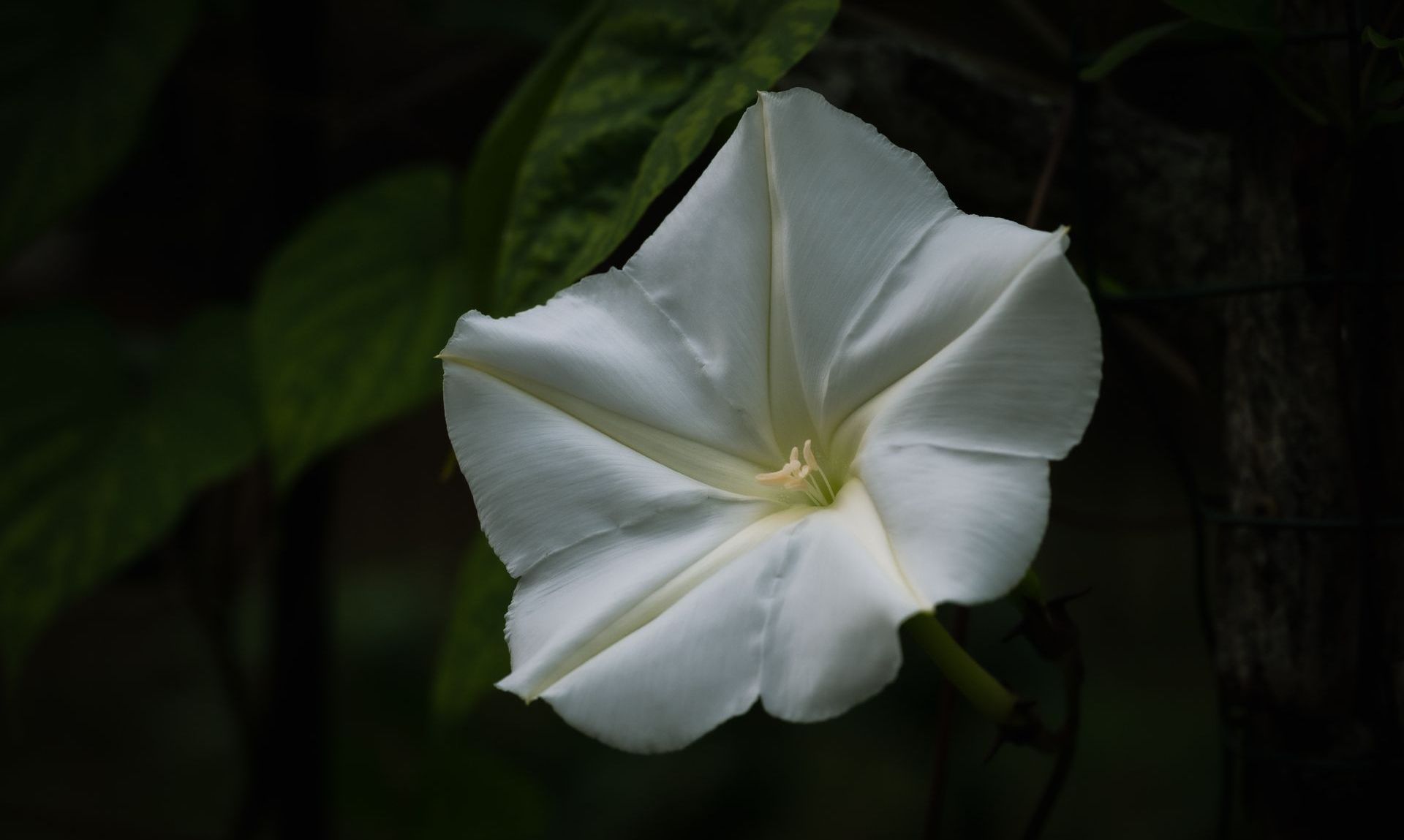
Moon Flowers, Ipomoea alba, are trumpet-shaped like morning glories, are bright white, and come out only at night. They are a perennial vine in southern climes like Arizona but are grown as annuals in southern Ontario. They do not open by light or moonlight but have photo-sensors that track the length of day. In late summer or early fall, they bloom at sundown and remain in bloom all night. When in bloom they glow and are quite striking, but when dawn arrives the flowers close up.
A night garden is a thing, who knew? Actually the YA book, The Night Gardener, by Jonathan Auxier (another great read! a little creepy, deliciously so) features moonflowers also, though that is not all the gardening the night gardener does (of course).
Bees or wasps or birds can sense and drink from daytime flowers, but what is going on with moonflowers? How are they pollinated? Moonflowers have a lovely fragrance and attract night-flying creatures like moths and bats to their nectar.
The superpower of light, super interesting, the things you learn reading to the grandkids.
the good doctor