The Stanley Cup and Eyes!

Blog vol 5.2. The Stanley Cup and Eyes!
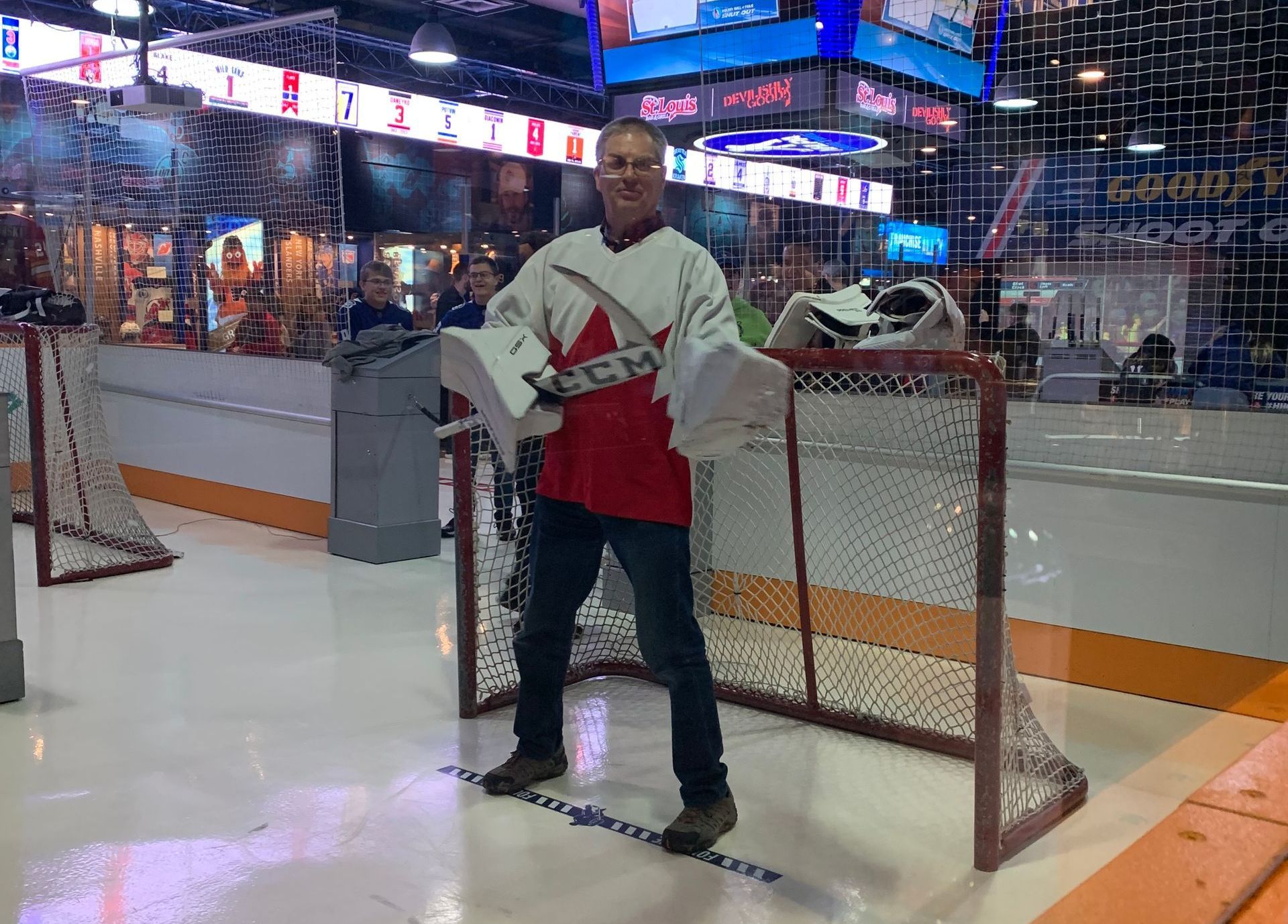

Last November, my sons and I went to the Hockey Hall of Fame. The most impressive room was the “Great Hall”, a 45-foot-high stained-glass dome with all the inductees of the Hall of Fame and all the hardware, including a replica of the Cup. When I was a kid, I had two big dreams: the biggest, being an astronaut and travelling to the moon; the second, being a hockey player and winning the Stanley Cup. 


I think Roch Carrier put it best in his memorable story, The Hockey Sweater:


“The winters of my childhood were long, long seasons. We lived in three places - the school, the church, and the skating rink

- but our real life was on the skating rink.”


I would dream of being Guy Lafleur, hair whipping in the breeze, flying down the wing, crossing the blue line, winding up, and blasting a rocket into the top corner.  Being from Northern Ontario and having outdoor ice all winter long, we could do this many times.  What fun! 


The other night, I was really glad for another Northern Ontario boy from Sault Ste. Marie, Paul Maurice, who played junior hockey in Windsor with the Spitfires. During a 1987 preseason game, he was hit in the right eye by a deflected puck. That was a game-finisher for him. He still had sight in his eye, but his peripheral vision was diminished. He finished most of that season but had lost his edge in junior hockey, losing the possibility of an NHL hockey career. The Spitfires, however, recognized his leadership abilities and made him an assistant coach.  And, as they say, the rest is history.


Hard to believe, but helmets in the NHL were not mandatory until 1979, after which all new players had to wear a “Bucket”, and goalies had to wear a mask — unbelievable that until then goalies were not required to wear a mask (thank you Jacques Plante). Hockey is partly a game of chance.  The puck can bounce around like crazy to the point that there is even such a thing as “Puck Luck.” Unfortunately, it can land in places that cause serious injury, like the eye. Even more dangerous, the end of a stick blade has also ended many a career due to eye injury.


The powers that be decided to join the rest of the world and in 2013, the NHL mandated visors to protect the face and eyes of their players. Close to home, in March of 2000, a Toronto Maple Leaf, Bryan Berard, a top pick defenceman with tons of promise, had his career curtailed with a nasty eye injury. Thankfully, we have mandatory eye protection at all levels of hockey now. 


REMINDER:  Random stuff happens.  ALWAYS wear eye protection around whirring machines (thinking weed whackers here, saw one of these injuries this week) or hockey sticks. 


No doubt that Paul Maurice has had a great career as a coach and, after 26 seasons, finally hoisted the Cup. Congratulations!


Til next week, (and next year for Leafs’ fans)


The good doctor


By Dr. Mark Germain May 1, 2026
The good doctor discusses how the eye is a window to the heart with the help of the OCT.
The good doctor take a deeper look at how gut health is connected to eye tissues.
By Dr. Mark Germain April 29, 2026
Blog vol 6.40. The Gut and the Eyes. One of my biggest jobs is to keep abreast of new research and advances in eye health. Most recently, we have seen new stem cell research, gene therapies, as well as new drugs for dry and wet macular degeneration. In January of this year, there was an article in the journal, Cell Death and Disease, that looked at cell apoptosis, specifically with the photoreceptors of the eye. (Read the article here ). Apoptosis is the genetic programming of deliberate and constructive cell death, allowing for the maintenance of healthy structures and systems in the body. Some estimates have the body replacing 50 to 70 billion cells daily by this process. Necrosis, on the other hand, is unplanned cell death caused by injury, toxins, or other negative outside factors; this causes inflammation and disrupts the body’s balance of things. There are stressors that speed up cell turnover. The study looked at photoreceptors in the retina and were able to demonstrate cellular recovery, even in late stages of apoptosis, recovery not breakdown. When certain stressors were reduced, by working with the mitochondria, there was recovery of the photoreceptor cells. How? Mitophagy, the mitochondria’s own process of programmed breaking down and then repurposing the recycled components for new ones. This mitochondrial repair helps to reverse the sequence of apoptosis for the photoreceptors. Mitochondria, how cool. How is this helpful for our eyes? Conditions like retinitis pigmentosa or macular degeneration directly involve the photoreceptors and may be slowed or reversed by helping the mitochondria. So, let’s take care of those mitochondria. There is some evidence for nutritional support for the mitochondrial system. The nutrient, Urolithin A (UA), which is a compound made in our gut from fiber found in pomegranates, berries, and nuts is the only clinically proven substance known to trigger mitophagy, made in the gut no less. Vitamin B3 is critical for mitochondria function, however vitamin B3 based supplements are still to be clinically tested for their support of cell recovery. Nutrients Coenzyme Q10 and L-carnitine are known to help the mitochondria generate energy, and interestingly, infrared light therapy has also been shown to benefit mitochondrial function. Again, food for thought. The gut and its function needs a lot of research. How do probiotics and nutrient precursors affect eye tissues? It is so interesting that the gut can be a factor in eye health. Maybe adding Urolithin A as a supplement is wise, along with the antioxidants in Lutein and Zeaxanthin we use to combat photoreceptor degeneration. Will keep you posted on any new developments.  The good doctor
By Dr. Mark Germain April 16, 2026
The good doctor focuses in on visual processing. Why do we miss things that are right in front of our eyes?
By Dr. Mark Germain April 10, 2026
The good doctor discusses the Artemis II mission, space travels affects on the eyes, and "the dark side of the moon"
By Dr. Mark Germain April 3, 2026
The good doctor discusses exciting new and emerging options to treat nystagmus.
By Dr. Mark Germain March 27, 2026
The good doctor reflects on The Country of the Blind, a book by Andrew Leland which gives insight into the experience of vision loss.
More Posts