O Christmas Bird!

Blog vol 4.26. O Christmas bird!


When I was in university, we would jokingly say that we were taking a course in ornithology, a bird course, if it was real easy. I have to admit, after the rigours of our regular optometry program, it was a nice break to take something less demanding.  Talking about birds… (what an awesome segue!)… there is a great substack called “Easy by Nature” by Bill Davison a bird enthusiast who takes amazing photos of all sorts of birds.


His most recent article was on birding over the Thanksgiving holiday (he is American). November is potentially a challenging time for birding, but the author’s enthusiasm and love for nature are irresistible. His photographs of birds and wildlife in this and his 23 other articles are truly beautiful. 


Getting your kids and grandkids involved is so great. Being an optics guy and one who fits and prescribes telescopes and lenses for my patients, I could not agree more that getting some decent “bins” (binoculars) for your budding ornithologists is a good idea. There is so much to see when you are paying attention, right now, right in your backyard, yes, even in November/December. 


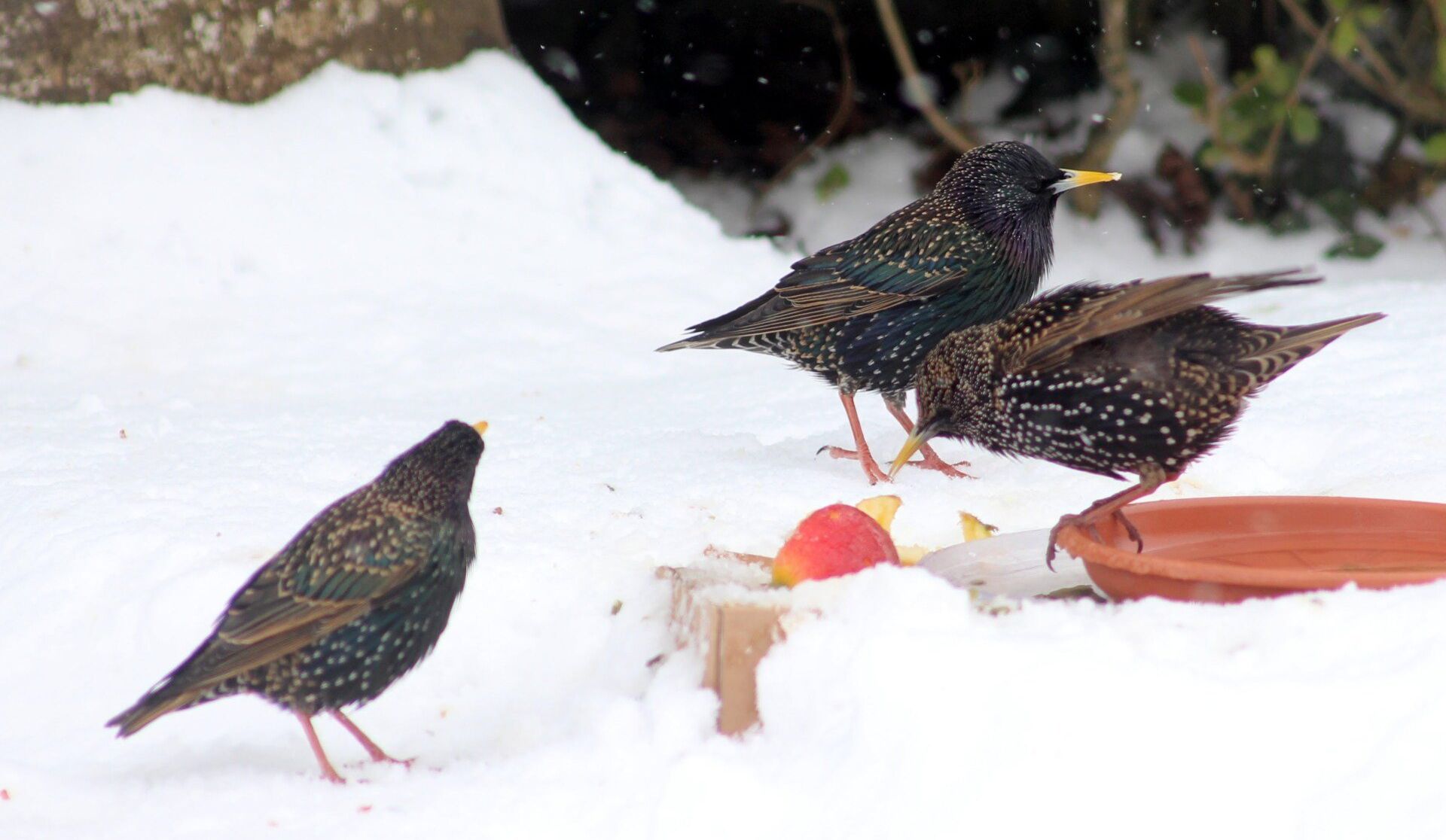
Just last week in a patient exam, we discussed their recent birding expedition to the rain forests in Brazil. Their group cited 275 different species of birds on that trip, wow! the biodiversity in the tropics is astounding. Yet you can see a remarkable variety in your own backyard or on the many trails in the Hamilton region.  Our family keeps a record of any bird that lands or lives or flies over our property. We write down its English name and its genus and species and are up to 50 species at last count, from the very common European Starling (Sturnus vulgaris ) to the more rare White-crowned Sparrow (Zonotrichia leucophrys). Some of our fly byes are the migrating Trumpeter Swan (Cygnus buccinator) and the Canada Goose (Branta canadensis).


The takeaway is that whatever your age, wherever you live, you can find real enjoyment in birding and you can share that with so many others. Resources like Cornell University and their app, Merlin Bird ID, bring the experts along with you on your birding expedition.  They can be quite informative. Some of my patients have bird lists that have over a thousand different species!! Obviously, they have gone beyond their backyard.


Do check out the “Easy by Nature” substack. I particularly enjoyed his Goldfinch photos, so lovely. 


Do consider birding as a special family activity for the Christmas season. A bird feeder also provides great opportunity for watching your feathered neighbours. What Christmas birds live in your backyard?


Happy Christmas birding,


The good doctor

The good doctor take a deeper look at how gut health is connected to eye tissues.
By Dr. Mark Germain April 29, 2026
Blog vol 6.40. The Gut and the Eyes. One of my biggest jobs is to keep abreast of new research and advances in eye health. Most recently, we have seen new stem cell research, gene therapies, as well as new drugs for dry and wet macular degeneration. In January of this year, there was an article in the journal, Cell Death and Disease, that looked at cell apoptosis, specifically with the photoreceptors of the eye. (Read the article here ). Apoptosis is the genetic programming of deliberate and constructive cell death, allowing for the maintenance of healthy structures and systems in the body. Some estimates have the body replacing 50 to 70 billion cells daily by this process. Necrosis, on the other hand, is unplanned cell death caused by injury, toxins, or other negative outside factors; this causes inflammation and disrupts the body’s balance of things. There are stressors that speed up cell turnover. The study looked at photoreceptors in the retina and were able to demonstrate cellular recovery, even in late stages of apoptosis, recovery not breakdown. When certain stressors were reduced, by working with the mitochondria, there was recovery of the photoreceptor cells. How? Mitophagy, the mitochondria’s own process of programmed breaking down and then repurposing the recycled components for new ones. This mitochondrial repair helps to reverse the sequence of apoptosis for the photoreceptors. Mitochondria, how cool. How is this helpful for our eyes? Conditions like retinitis pigmentosa or macular degeneration directly involve the photoreceptors and may be slowed or reversed by helping the mitochondria. So, let’s take care of those mitochondria. There is some evidence for nutritional support for the mitochondrial system. The nutrient, Urolithin A (UA), which is a compound made in our gut from fiber found in pomegranates, berries, and nuts is the only clinically proven substance known to trigger mitophagy, made in the gut no less. Vitamin B3 is critical for mitochondria function, however vitamin B3 based supplements are still to be clinically tested for their support of cell recovery. Nutrients Coenzyme Q10 and L-carnitine are known to help the mitochondria generate energy, and interestingly, infrared light therapy has also been shown to benefit mitochondrial function. Again, food for thought. The gut and its function needs a lot of research. How do probiotics and nutrient precursors affect eye tissues? It is so interesting that the gut can be a factor in eye health. Maybe adding Urolithin A as a supplement is wise, along with the antioxidants in Lutein and Zeaxanthin we use to combat photoreceptor degeneration. Will keep you posted on any new developments.  The good doctor
By Dr. Mark Germain April 16, 2026
The good doctor focuses in on visual processing. Why do we miss things that are right in front of our eyes?
By Dr. Mark Germain April 10, 2026
The good doctor discusses the Artemis II mission, space travels affects on the eyes, and "the dark side of the moon"
By Dr. Mark Germain April 3, 2026
The good doctor discusses exciting new and emerging options to treat nystagmus.
By Dr. Mark Germain March 27, 2026
The good doctor reflects on The Country of the Blind, a book by Andrew Leland which gives insight into the experience of vision loss.
By Dr. Mark Germain March 19, 2026
This week's blog focuses on the newest version of the Neurolens - a lens with technology that can provide relief for headaches, neck pain, and eye strain caused by trigeminal dysphoria.
More Posts