Swimming and your eyes

Blog vol 7.2. Swimming and your eyes
There is nothing like jumping into cool water on a hot, sunny day.
Of course, we limit our sun exposure, use SPF 50 lotions on our skin, and wear our sunglasses. What about the water itself? How worried should we be about our eyes in a pool or a lake? Is opening your eyes underwater a good idea? Are there potentially bacteria and other microorganisms in pool or lake water that can infect the eye?
There are, and they can affect more than just the eye. That is why, to combat unhelpful organisms in pools and hot tubs, we use discriminate levels of halogens, usually bromine or chlorine. The ideal is high enough levels of free halogen to keep bacteria down, but when this free halogen combines with sweat, urine, and oils, it becomes smelly and can irritate the eyes. The whole thing gets trickier to control when the pH levels and the water temperature fluctuate. If the free halogen levels are too low, then bacteria thrive; if we get too much combined halogen, we get eye irritation.
So, chlorine, especially combined with other things found in pools, and at the higher levels necessary when it is hot and lots of people are using a pool, unsurprisingly will irritate the eye. This irritation compromises the eye’s natural defenses.
Lakes and ponds do not have chlorine, but they also do not have any controls on the bacteria and microorganisms growing in the water. This is a problem, again especially when the water warms up and there are lots of people swimming, though even a remote body of water hosts lots of living organisms, some very small.
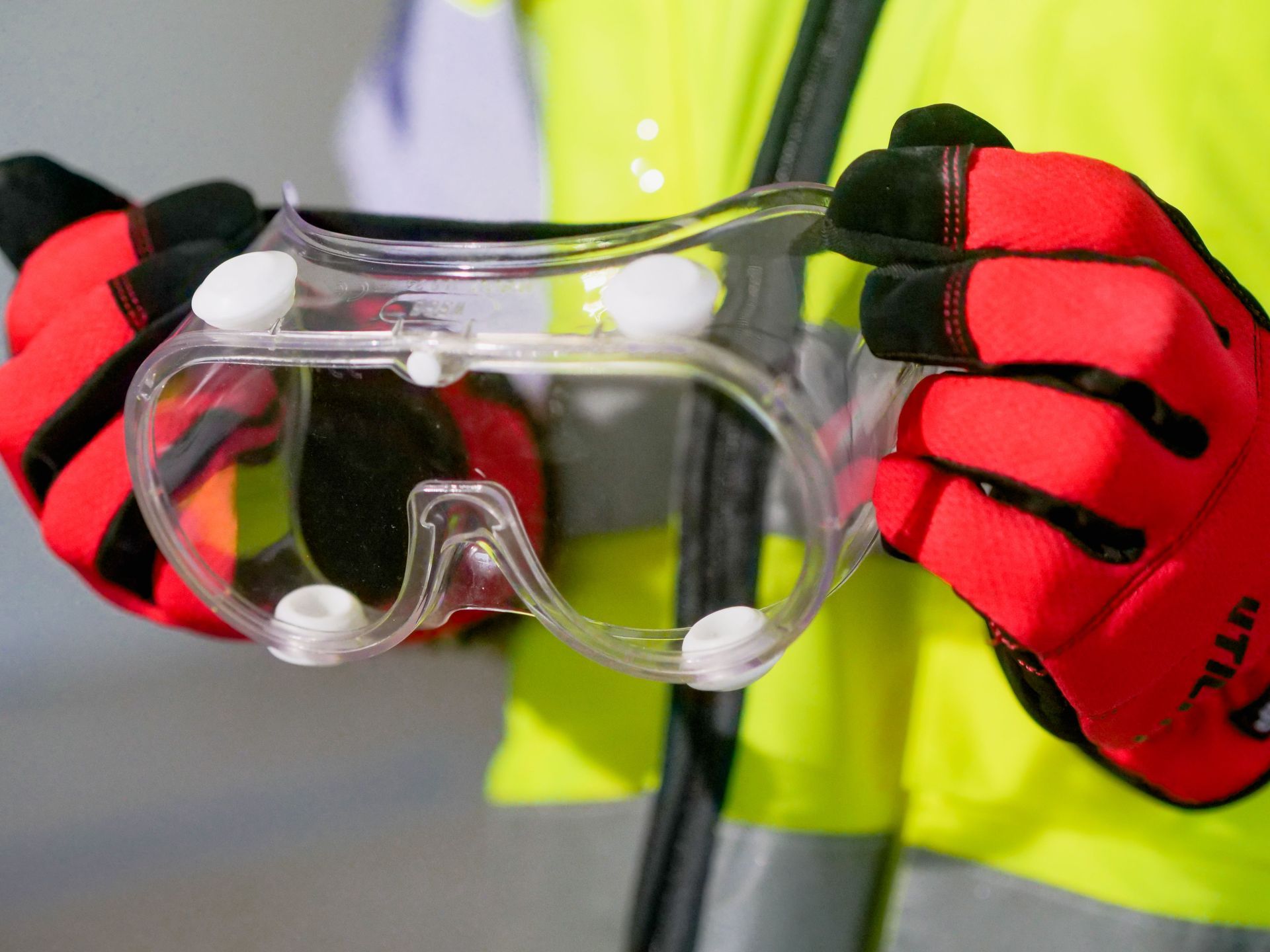
The solution, as you probably guessed, is everyone’s favourite fashion statement: goggles.
Have you ever seen a serious swimmer without them?
Swim googles should be tight sealing, fitting snug around the eyes to keep the water out. They can be made in prescription and with a light tint for brightness. Swim goggles are relatively inexpensive and a great value, considering they protect your eyes from chlorine and pool chemicals, preserve your tear film, reduce eye irritation and redness, and protect against bacteria and other contaminants.
The higher temperatures are great for sun and fun but are also optimal for bacterial growth and bacteria love contact lenses. Please DO NOT wear your contact lenses when swimming or in a jacuzzi.
DO NOT WEAR YOUR CONTACTS WHILE SWIMMING! You are inviting bacterial keratitis, a nasty infection of the cornea which can be very difficult to treat and can result in permanent vision loss. People wear contacts while swimming so they can see and because it is a pain to take the contacts in and out, I get it.
Surprisingly, the best vision is with goggles. They allow you to see crystal clear where you are going and what is around you. Think of goggles being like those glass-bottomed boats you use for touring shipwrecks, the sheet of polycarb or glass mounted in the hull faces the water allowing you to see through it. Swim goggles are a real marvel; you are applying basic optics while having fun.
Remember, anytime your eyes are sore or red, do not hesitate to call. In fact, call right away.
Happy summer!
The good doctor