The wonder of the Kestrel
Blog vol 6.29. The wonder of the Kestrel.
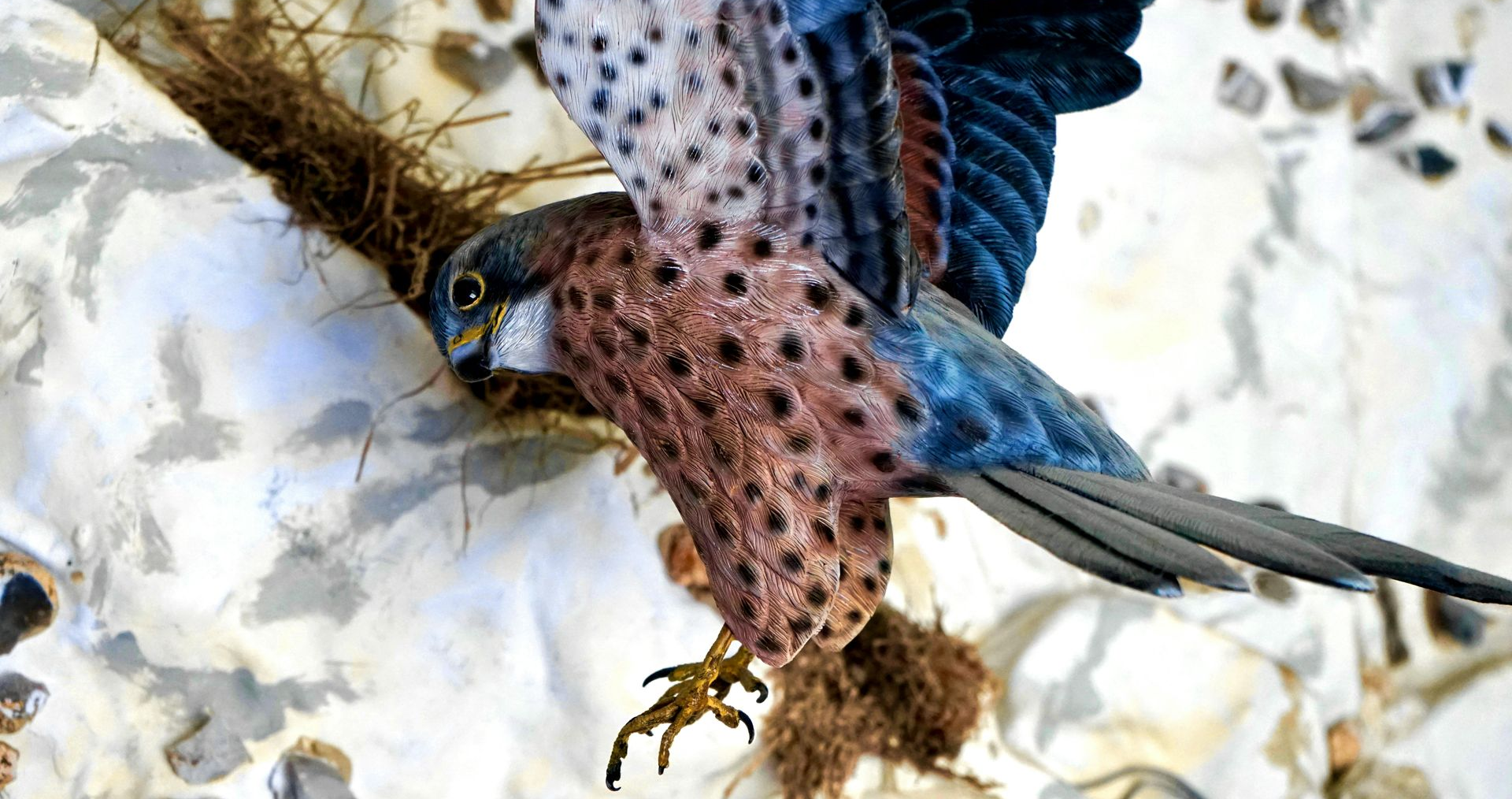
Countless reels come across my screen. One that stood out this week: a videographer and ornithologist captured a Kestrel in flight. It was hovering, with head rock-solid still, while it soared in a brisk wind. Fascinating and beautiful.
In the 1800’s, the British poet, Gerard Manly Hopkins, captured this image in a poem called The Windhover.
High there, how he rung upon the rein of a wimpling wing
In his ecstasy! then off, off forth on swing,
As a skate's heel sweeps smooth on a bow-bend: the hurl and gliding
Rebuffed the big wind. My heart in hiding
Stirred for a bird, – the achieve of, the mastery of the thing!
The real marvel, from an optometric perspective, is the steadiness which allows the kestrel to maintain fixation on its prey. Raptors have exceptional distance vision. Combine that with steadiness, and it becomes clear why you do not want to be a sparrow within range of this bird.
Another bird with rock-steady fixation is the chicken. Their internal “gyroscope” is so effective that videographers have been using cameras mounted on chickens’ heads to get the most stable images, (see video here).
Unlike the Kestrel that can move its eyes around, the chicken’s eyes are immobilized, so it must rely mostly on its optokinetic reflex (OKR) to keep the world still. The OKR is an eye reflex that works to keep the world from blurring when the entire visual field moves around you. In humans, this reflex automatically stabilizes the image on the retina by moving the eyes to match the direction and speed of the moving scene. Chickens and other birds maintain a stable head position whatever the rest of the body is doing in order to optimize vision, critical for survival. With all the advances in imaging, we have yet been able to stabilize images as well as a chicken.
I have a number of patients with nystagmus, which is quite common in conditions like albinism. Nystagmus is the roving back and forth of the eye to compensate for reduced visual function. Most people with nystagmus have a null point, a position of the eyes that has the least amount of movement and corresponds to the best position for improved vision. Even with reduced visual function in humans, image stabilization is critical.
The next time you see a Kestrel (or chicken) keeping its head stock-still, marvel at what a feat that is.
Til next week,
The good doctor