The Shadow Knows! A Lunar Eclipse.

Blog vol 5.14. The Shadow Knows! A Lunar Eclipse.

From 1930 to 1954 there was a very popular radio drama called “The Shadow” in which Lamont Cranston, a detective with superpowers, solved crimes and apprehended nefarious criminals. The program began with the question, “Who knows what evil lurks in the hearts of men?” The shadow.


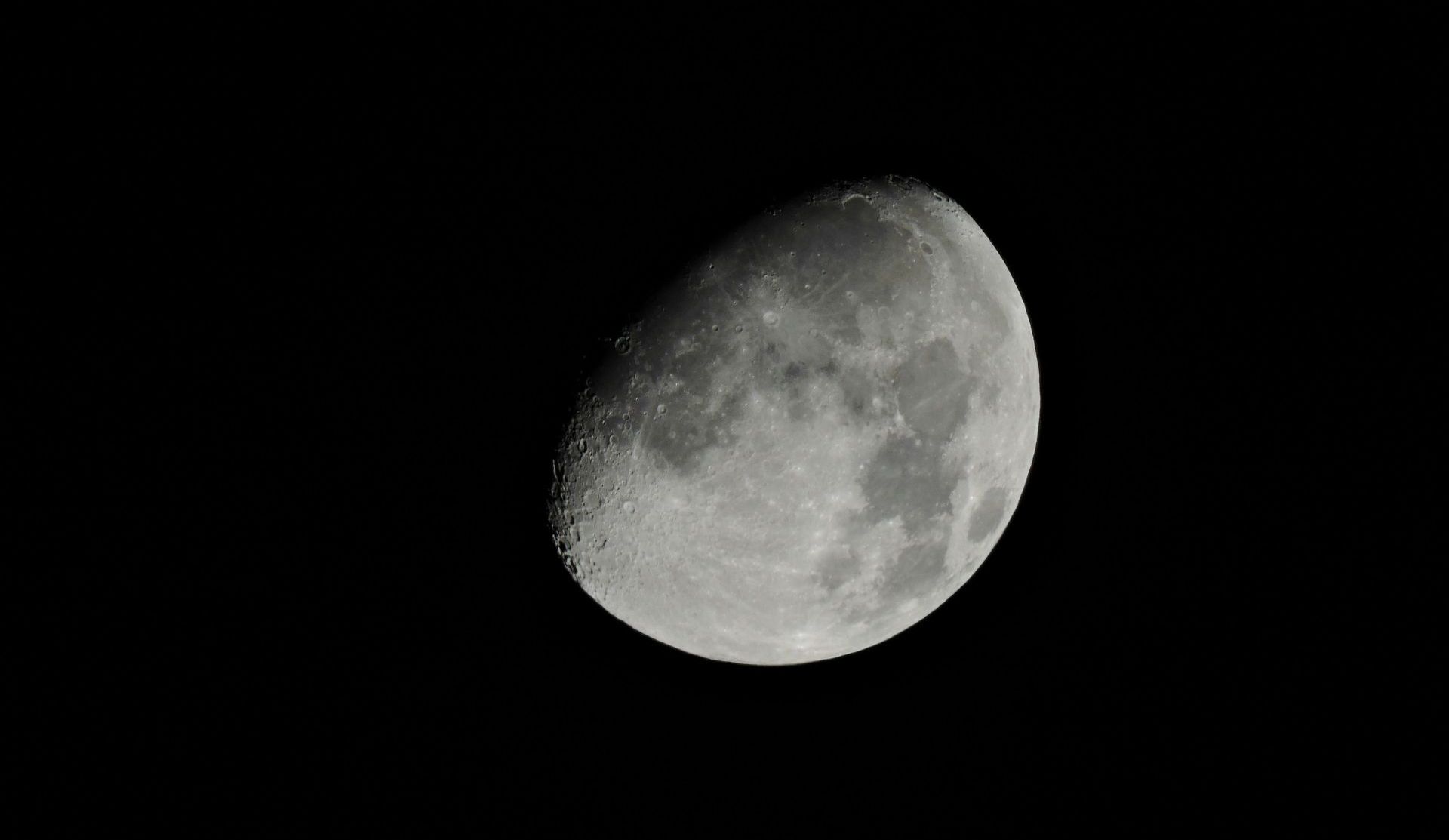
Last night most of the world saw another shadow over a Harvest Super moon, a remarkable event in the celestial calendar. Talk about drama, Marvel Studios could have made an epic movie, The Shadow on the Moon, or Shadowed Harvest. Actually in real life, it was disappointingly undramatic. I think the main reason was the crazy drama of a total solar eclipse in early April, 2024, made this lunar eclipse pale by comparison. There I was last night (September 17), having heard the word “eclipse”, expecting to be wowed by the dance of sun, moon and earth. 


The word “partial” was included with “eclipse”, which makes a big difference. In April we had a “total” solar eclipse, in which the moon is perfectly placed to completely shadow the sun during midday. Last night, the lunar eclipse happened when the earth created a shadow that part of the moon passed through.


In a total lunar eclipse, the central shadow of the earth, the umbra (Latin for shadow) covers the entire moon resulting in a darkened moon which turns to red. The light that is reflecting off the moon has come through the earth’s atmosphere, much like a red sunset but a lot dimmer, creating a “blood moon”. Really cool. 


In a partial lunar eclipse, part of the moon passes through the umbra, which we saw on the top half of the moon last night, and the rest is in the penumbra (Latin for almost shadow). Still quite dramatic. Over time the moon dances around the umbra emphasizing the moon’s movement through space. One neat shot from Wikipedia with multiple images overlaid with time lapse captures it nicely.


What I could not really see last night was a change in the light that was coming through the penumbra on the rest of the moon’s surface. It was really difficult to pick up any dimming, let alone a colour change. I did see a coloured ring in the clouds around the moon that did have some red tones, but difficult to say.  The dimming is only by 10% when it goes through the penumbra, so you would need a light meter to fully appreciate it, I’m not sure it can be detected by the eye.


The really cool thing is that all these celestial bodies are out there moving about all the time and in very predictable regular patterns, so we know what to look for and when. The next total lunar in some parts of the world, including the Americas, is March 13/14 2025. Mark your calendars. (I think I will bring a light meter this time). 


The good doctor


By Dr. Mark Germain May 1, 2026
The good doctor discusses how the eye is a window to the heart with the help of the OCT.
The good doctor take a deeper look at how gut health is connected to eye tissues.
By Dr. Mark Germain April 29, 2026
Blog vol 6.40. The Gut and the Eyes. One of my biggest jobs is to keep abreast of new research and advances in eye health. Most recently, we have seen new stem cell research, gene therapies, as well as new drugs for dry and wet macular degeneration. In January of this year, there was an article in the journal, Cell Death and Disease, that looked at cell apoptosis, specifically with the photoreceptors of the eye. (Read the article here ). Apoptosis is the genetic programming of deliberate and constructive cell death, allowing for the maintenance of healthy structures and systems in the body. Some estimates have the body replacing 50 to 70 billion cells daily by this process. Necrosis, on the other hand, is unplanned cell death caused by injury, toxins, or other negative outside factors; this causes inflammation and disrupts the body’s balance of things. There are stressors that speed up cell turnover. The study looked at photoreceptors in the retina and were able to demonstrate cellular recovery, even in late stages of apoptosis, recovery not breakdown. When certain stressors were reduced, by working with the mitochondria, there was recovery of the photoreceptor cells. How? Mitophagy, the mitochondria’s own process of programmed breaking down and then repurposing the recycled components for new ones. This mitochondrial repair helps to reverse the sequence of apoptosis for the photoreceptors. Mitochondria, how cool. How is this helpful for our eyes? Conditions like retinitis pigmentosa or macular degeneration directly involve the photoreceptors and may be slowed or reversed by helping the mitochondria. So, let’s take care of those mitochondria. There is some evidence for nutritional support for the mitochondrial system. The nutrient, Urolithin A (UA), which is a compound made in our gut from fiber found in pomegranates, berries, and nuts is the only clinically proven substance known to trigger mitophagy, made in the gut no less. Vitamin B3 is critical for mitochondria function, however vitamin B3 based supplements are still to be clinically tested for their support of cell recovery. Nutrients Coenzyme Q10 and L-carnitine are known to help the mitochondria generate energy, and interestingly, infrared light therapy has also been shown to benefit mitochondrial function. Again, food for thought. The gut and its function needs a lot of research. How do probiotics and nutrient precursors affect eye tissues? It is so interesting that the gut can be a factor in eye health. Maybe adding Urolithin A as a supplement is wise, along with the antioxidants in Lutein and Zeaxanthin we use to combat photoreceptor degeneration. Will keep you posted on any new developments.  The good doctor
By Dr. Mark Germain April 16, 2026
The good doctor focuses in on visual processing. Why do we miss things that are right in front of our eyes?
By Dr. Mark Germain April 10, 2026
The good doctor discusses the Artemis II mission, space travels affects on the eyes, and "the dark side of the moon"
By Dr. Mark Germain April 3, 2026
The good doctor discusses exciting new and emerging options to treat nystagmus.
By Dr. Mark Germain March 27, 2026
The good doctor reflects on The Country of the Blind, a book by Andrew Leland which gives insight into the experience of vision loss.
More Posts