
Lyme Disease Again!

Blog vol 5.44. Lyme Disease Again!


If you have been following us for some time, then you saw this coming. Every spring I go on a “rant” about Deer ticks and Lyme disease. I was hoping that with a Northern Ontario kind of winter (when you do not have to convert to Fahrenheit because Celsius and Fahrenheit are the same at -40 degrees), we would see reduced tick numbers. Who knew that ticks do not mind the cold. 


Why is an eye doctor so interested in Lyme disease? Chronic Lyme disease can cause inflammation to all your body tissues including the eye, with uveitis, optic neuritis, scleritis, conjunctivitis, and every “itis” you can think of that can affect the eye.   Symptoms vary from pain, soreness, redness, blurry vision, double vision, and reduced contrast sensitivity. The key is prevention.


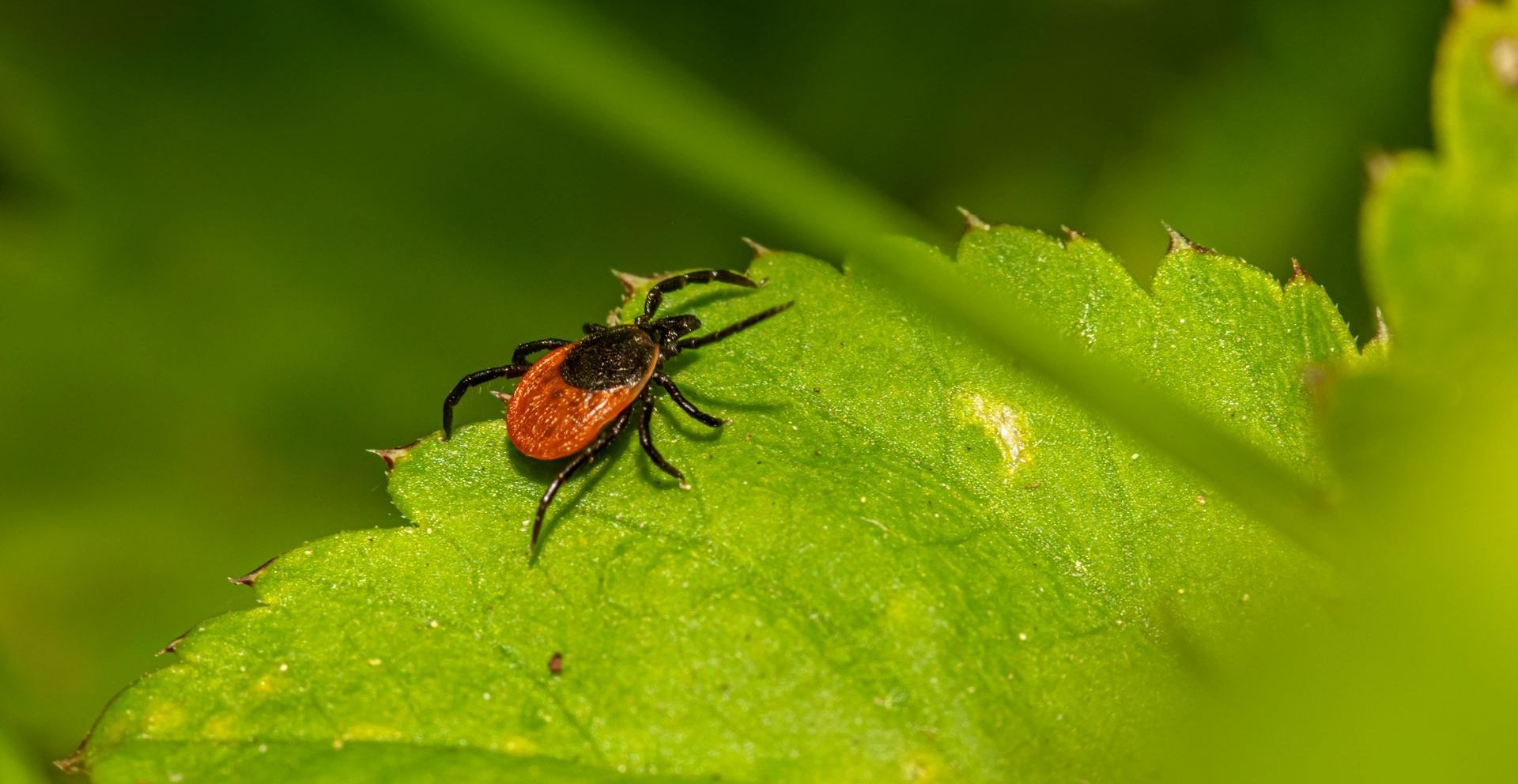
The ticks are out there. I should know, I got one and it burrowed deep and was not noticed until its head was a few layers down into the adipose tissue. We tried to remove the tick with tweezers, but it was holding on fiercely and was buried deep so we only got part of it. It was also quite red around the site. We went to the doctor. The doctor made a small incision and cleaned out the area thoroughly, finishing with a single stitch, then had me take a prophylactic dose of antibiotic. I was given 2 X100 mg doxycycline capsules to prevent infection, but if the site turns to a bull’s eye, time for a full dose of an antibiotic like Azithromycin.


Catching a tick bite early is key, so checking for ticks is important. Hopefully you can catch it before it embeds and then you can check to see if it is a deer tick. Use alcohol wipes to sterilize the site and try to pull it straight out with tweezers. Let a professional remove it if you cannot get it all. The doctor I saw did feel that it was important to remove all the tick. Many of the sites online (even the government of Canada Lyme disease website) suggest leaving whatever parts of the tick you cannot pull out and letting the body work them out. This is not what I was told by the doctor. I would agree that it would seem best to get any potential for infection out of the body. 


At the same time at the after-hours clinic, another man came in with a tick embedded in his belly button, fun. So, they are out there. Be careful, no paranoia necessary, just check regularly, and if you are a tick’s lunch get care if necessary.


Now, back to hiking and putting together bird houses before the new migrant birds settle in.


‘til next week,


the good doctor


By Dr. Mark Germain May 22, 2026
Ever wondered where the phrase "apple of the eye" came from? The good doctor explains.
By Dr. Mark Germain May 17, 2026
This week, we learn about the impact cataracts can have on life and the difference surgery can make.
By Dr. Mark Germain May 7, 2026
The good doctor admires the wonders of the Osprey's vision.
By Dr. Mark Germain May 1, 2026
The good doctor discusses how the eye is a window to the heart with the help of the OCT.
The good doctor take a deeper look at how gut health is connected to eye tissues.
By Dr. Mark Germain April 29, 2026
Blog vol 6.40. The Gut and the Eyes. One of my biggest jobs is to keep abreast of new research and advances in eye health. Most recently, we have seen new stem cell research, gene therapies, as well as new drugs for dry and wet macular degeneration. In January of this year, there was an article in the journal, Cell Death and Disease, that looked at cell apoptosis, specifically with the photoreceptors of the eye. (Read the article here ). Apoptosis is the genetic programming of deliberate and constructive cell death, allowing for the maintenance of healthy structures and systems in the body. Some estimates have the body replacing 50 to 70 billion cells daily by this process. Necrosis, on the other hand, is unplanned cell death caused by injury, toxins, or other negative outside factors; this causes inflammation and disrupts the body’s balance of things. There are stressors that speed up cell turnover. The study looked at photoreceptors in the retina and were able to demonstrate cellular recovery, even in late stages of apoptosis, recovery not breakdown. When certain stressors were reduced, by working with the mitochondria, there was recovery of the photoreceptor cells. How? Mitophagy, the mitochondria’s own process of programmed breaking down and then repurposing the recycled components for new ones. This mitochondrial repair helps to reverse the sequence of apoptosis for the photoreceptors. Mitochondria, how cool. How is this helpful for our eyes? Conditions like retinitis pigmentosa or macular degeneration directly involve the photoreceptors and may be slowed or reversed by helping the mitochondria. So, let’s take care of those mitochondria. There is some evidence for nutritional support for the mitochondrial system. The nutrient, Urolithin A (UA), which is a compound made in our gut from fiber found in pomegranates, berries, and nuts is the only clinically proven substance known to trigger mitophagy, made in the gut no less. Vitamin B3 is critical for mitochondria function, however vitamin B3 based supplements are still to be clinically tested for their support of cell recovery. Nutrients Coenzyme Q10 and L-carnitine are known to help the mitochondria generate energy, and interestingly, infrared light therapy has also been shown to benefit mitochondrial function. Again, food for thought. The gut and its function needs a lot of research. How do probiotics and nutrient precursors affect eye tissues? It is so interesting that the gut can be a factor in eye health. Maybe adding Urolithin A as a supplement is wise, along with the antioxidants in Lutein and Zeaxanthin we use to combat photoreceptor degeneration. Will keep you posted on any new developments.  The good doctor
By Dr. Mark Germain April 16, 2026
The good doctor focuses in on visual processing. Why do we miss things that are right in front of our eyes?
More Posts